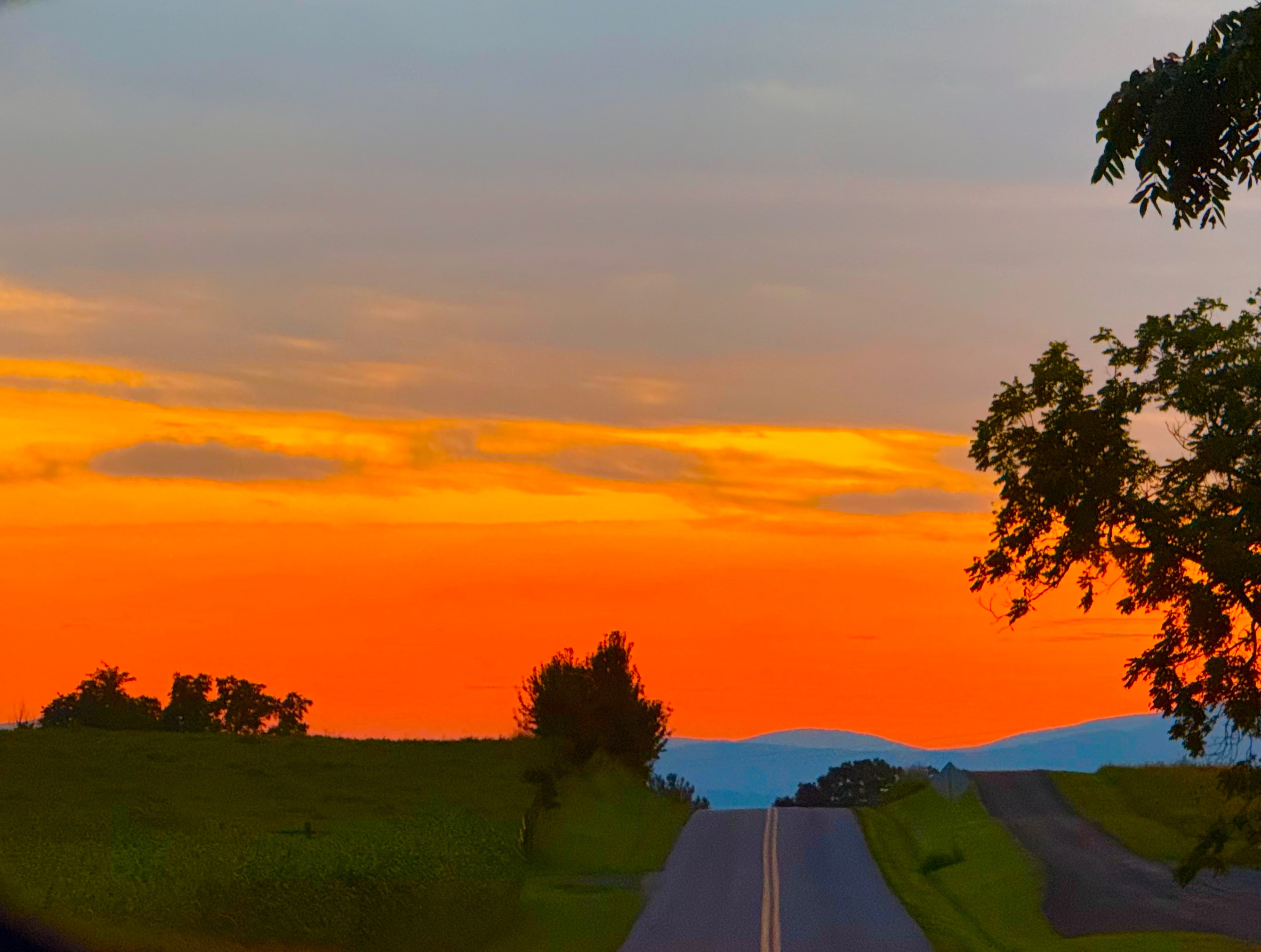
Back where I started

The Shenandoah Valley is the most beautiful place in the world. And, it’s home.

Growing up on a farm in Augusta County, Va., my dreams were bigger than me. I longed for excitement and spent time making up stories to tell at the dinner table. I remember sitting on the back steps, hoping one day I would see more of the world.

Dreams come true.

I started this blog before I left for Haiti where I would live and serve among people who would become family to me. A blog needs a name. My fingers typed out: The Long Way Home.

Thirteen years later, I’m home. Pretty close to where I started. Sharing time with my amazing family and so many friends. I’m becoming involved in community here. I do love Staunton, Va. (If you’ve never been, you really should come.)

Funny how life turns out

Not-so-short synopsis: I fell into Haiti missions like I have most things in my life (I literally learned to swim by accidently jumping into the deep end of the pool and was too embarrassed to yell for help.).

Roger Bowen is a retired Episcopal priest living with his wife here in Staunton. I met them at a social event. He told me his passion was introducing people from the U.S. to people in Haiti. Then he asked me to read Mountains Beyond Mountains, an incredible introduction to the small Caribbean country. I was hooked.

I began learning Haitian Creole in 2009. I even helped start a Creole class with a native speaker and 18 people showed up the first night!)

Short visits to two communities in Haiti sealed the deal – I had a new passion that would direct my life. In 2012 someone sent information about a job with Presbyterian Church (USA) for a post living in Port-au-Prince. I laughed and laughed. Then I heard a distinct call that said: You need to take that job. Haiti needs storytellers.

I applied, confident that folks in Louisville would see this was ridiculous. But no. By May 2013, three days after turning 51, I landed in Haiti’s bustling, brightly colored, crowded capital city. The next day I went to church with a group also staying in the guest house, met someone who gave me the name of a real estate agent, and in two days found the apartment where I would live for three years.

Whew

The kid from a farm in Stuarts Draft wasn’t just seeing the world; I was a part of it.

I loved and was loved. I trusted and earned trust. I walked on broken sidewalks crowded by tired produce sellers. I met close friends. I entered deep relationships navigating in another language. There was great joy. And heartache. And guilt for grave mistakes. And grace shown to me. Unbidden. Unearned.

After renting the apartment in Port-au-Prince, I left for Cherident where I would spend a month in the countryside. It was a community I knew well from earlier visits. Because I would be working with farmer organizations, my supervisors wanted me to live in a rural area to learn culture and Creole.

I had vaguely known one member of Papa Luc’s family, but here I was, packed for a month and more than a little uneasy. The driver wasn’t sure where to go when we drove into the village, but a young man standing on the road saw our truck. He flung open the door to the backseat where I sat, grabbed me in a big hug and cried, “My sister! You are here”

That was Herns Celestin. Papa Luc’s second son. He lived in Port-au-Prince about two hours away with his wife and young son. On the yard of the small wooden house, Herns sat me down immediately to “test my Creole”. He asked me to name what foods I liked. I started showing off. I named every food I knew in their language.

Most of the family were there that night. Papa Luc’s eight children took turns coming to the house, teaching me so much more than language. Lucson, Herns, Goursse, Wislande, Felix, Noel, Widline and Esther. Their spouses, classmates, children, neighbors — they all took me in like family.

An hour after I’d arrived, Papa Luc came home from his carpentry shop, other family members gathered at the table, dinner was served – with every food I’d named. It seems the women who were cooking were listening in on my lesson.

Herns came to where I sat before the meal. He carried a small tub with a bar of soap in it. In his other hand, a pitcher a water. Over his arm, a towel. I washed and dried my hands while he waited.

How I got through that meal without bawling, I do not know. But I ate. And ate. And talked. And listened. My stomach was full, and my heart. Oh my.

Prayer service

After dinner while trying to digest, Herns came to me again. The family was gathered for prayer, he said. It wouldn’t take long. Only about 15 minutes. What I thought would be a time of rest for me would be participating in this small worship service.

About a dozen of us stood around the cleared dinner table.

A prayer. A hymn. Everyone sharing a Scripture from memory. Someone reading a Psalm Papa Luc had chosen. And Papa Luc, a 63-year-old farmer and carpenter, a widower with eight children, a man who carried a tattered Bible but could recite the words with his eyes closed, asked that I read Psalm 7. In Creole.

Another prayer. The Doxology in French. Prayers of the people. And we all bid goodnight.

Every night in this house, there is worship of our Lord and Savior before sleep.

Seamlessly I was a thread in the fabric of a place of violent poverty, endless beauty and powerful faith.

Though I left Haiti in 2019 because of the violence, I KNEW I would go back home. Even as I stayed in Virginia those years, I called it temporary. So much was left back there – my mother’s Bible, family photographs, handmade furniture.

I followed the news to the point I couldn’t write about Haiti anymore. It was too hard to find new ways to say Haiti was on the brink of disaster – and find any hope in it. I had tough conversations with God. I went through a crisis of faith like I had never imagined.

Every day I speak with my dear friend Garry. As he says if he doesn’t hear from me, m pa allez. I’m not comfortable. Each morning conversations starts with: M domi, m levi, m di mèsi Bondye. (I went to sleep. I woke up. I thank God.)

And there is bad news to report

“Cindy, Sonson mouri.”

A phone call from Garry. A close friend who often had meals in my home had been shot to death.

“Cindy, Olna mouri.”

A colleague in the FONDAMA office died from Covid-19.

My heart.

Last year I was deployed to the Dominican Republic, still serving the Haiti partners, but learning the work of new ones. A new language. Adventures on buses. Surprising Haitians by speaking Creole with them. Just across the border from my second home, I found a new calling.

Then 2025. My work changed. I was assigned a job living in the U.S. I am in a new home here – not living with family or renting rooms in other homes as I’d done for five years. I won’t be deployed again. I’m home.

I’m excited about the new work. It’s slowly becoming clearer, and I will be back here to share those stories.

But with a few days off as this year ends, I’ve been able to deeply reflect.

It was only this week that I understood the door to Haiti has quietly closed. Though I hope to visit again when — God help us — there is any semblance of peace, I will not live in my second home again.

I’m in a place I love. I have Haitian art on the walls. I’ve had friends from Haiti visit here, and we ate Creole food (they cooked!) drank Prestige and remembered good times.

And so it is, I’ve taken the Long Road Home.

I hope to rework this blog and contribute regularly. Yes, Haiti needs storytellers.

So does the rest of this beautiful, broken and hurting world.

I hope to see you back here soon.
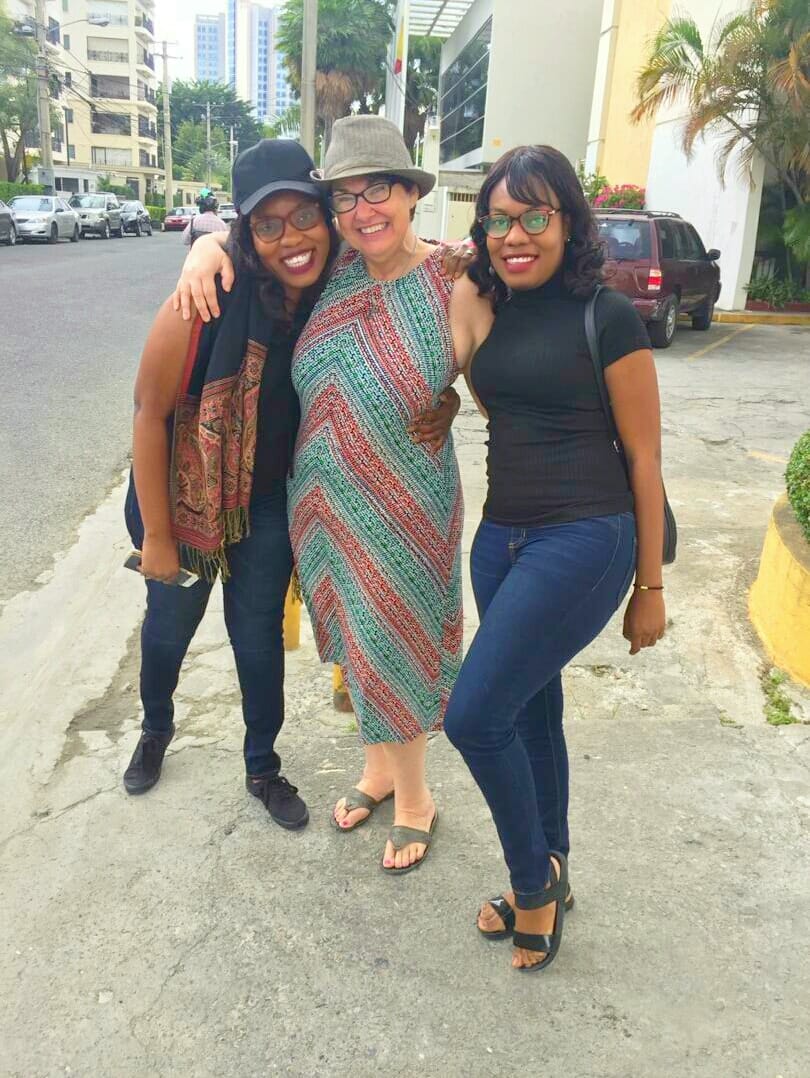
Walking each other home

First, let me thank everyone who wandered through the maze of buttons and instructions to join me in this blog. I do appreciate you all.

I promised I would connect more often. This is a good season for such a promise. I am near to overwhelmed with tasks. Preparing to move to another country has its built-in complications. Learning a new language while doing so just makes it that much more fun.

Eleven years ago about this time of year I prepared to move to Haiti. It seems a blur now. But I recognize the excitement of it. So many feelings! I am so happy to embark on adventure. At the same time, I’m already mourning time I won’t spend here in the Valley. Add that to the existing grief of being far from my friends in Haiti.

It’s best to stay busy, I know, but also to spend time reflecting.

In the four-plus years I’ve been back in the Valley, I’ve readjusted to life here. My work other than a few trips is remote, but I spent good times with many of you. I have lived with family and with friends who have become like family.

I’ve enjoyed being about to walk along the South River, driving in the Blue Ridge Mountains, meet so many of you for lunch or coffee.

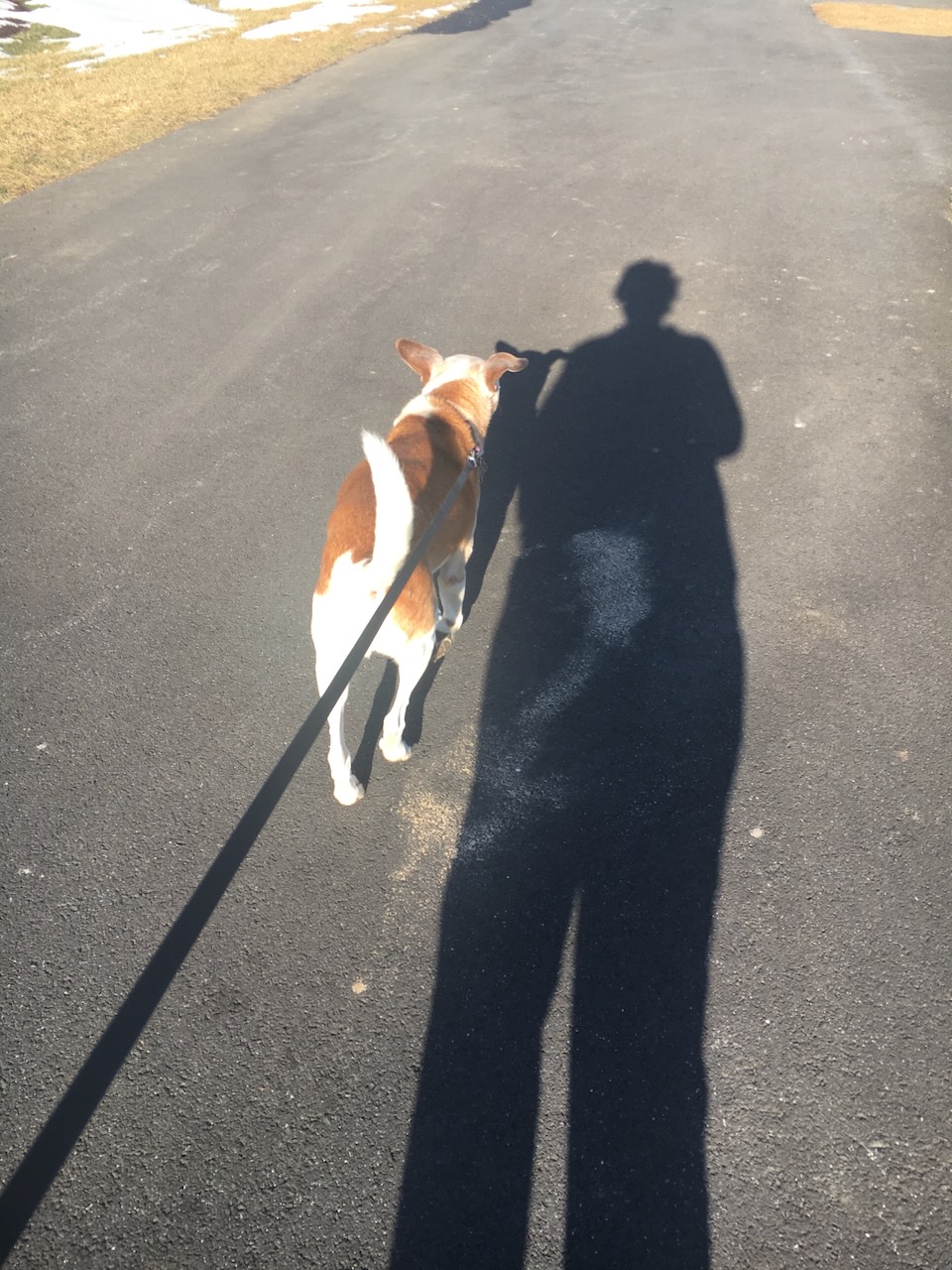
Many of you have allowed me to stay with your four-legged friends while you were away. That has been a gift. I have a few more of these occasions coming up. Memories spent with Ryan in the photo here are precious. He left us too soon.

I’m learning Spanish, researching land and food issues around the world, imagining what I will pack for the Dominican Republic and what I will do with the rest of the stuff I’ve gathered. (Too much stuff!)

I’m remembering Ram Dass’s quote: We all are just walking each other home.

In all the ways. To all our homes.

Be well, friends.

Going back into the world

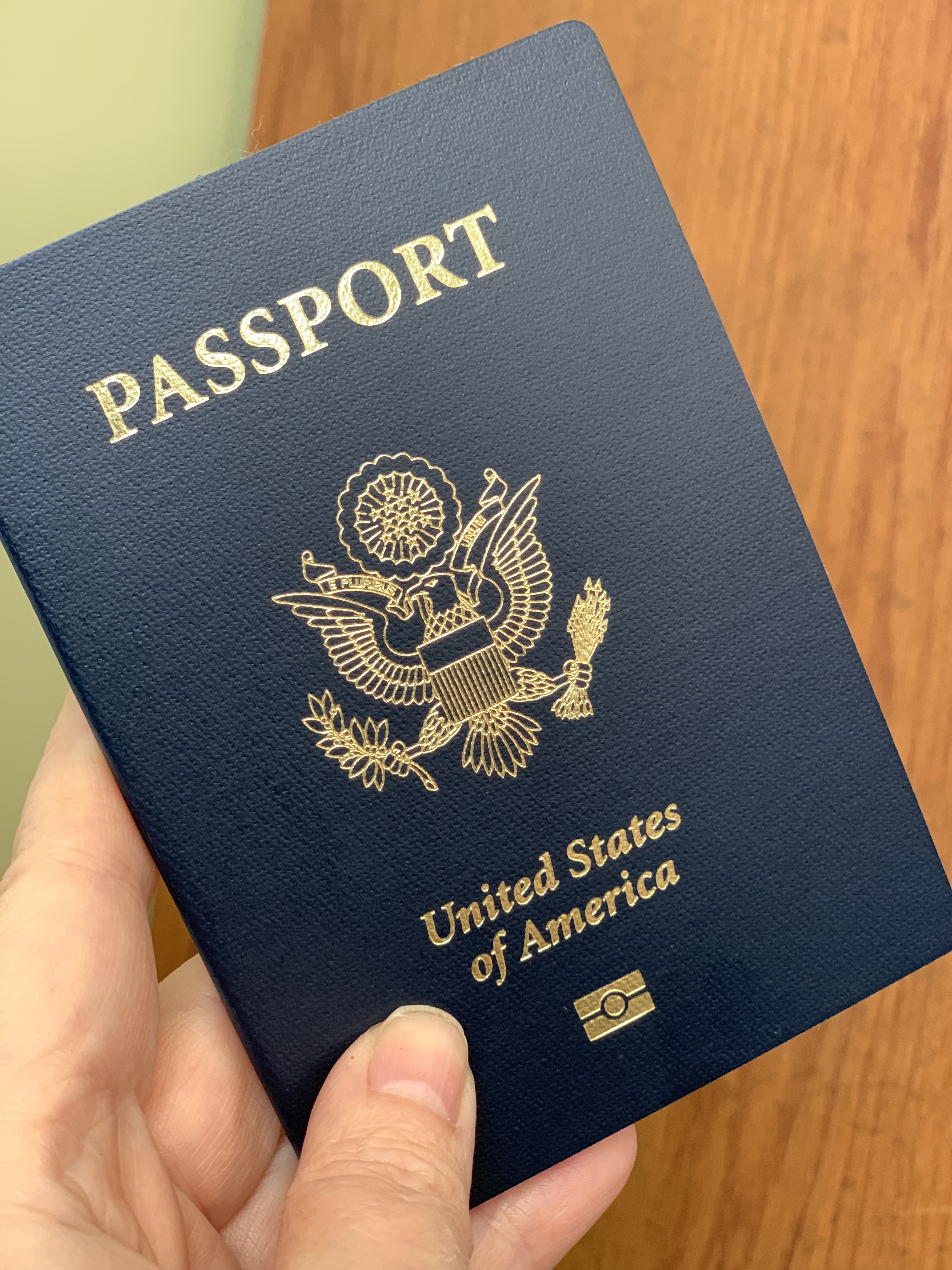
My new passport just arrived! And it’s about to be filled.

As some of you already know, I sadly will not be able to return to my beloved Haiti any time soon. The political and security situation remain horrific.

Gang violence spills into just about every neighborhood in Port-au-Prince, and quickly more and more communities around the country are affected by threat of violence. A de facto prime minister continues in office though his mandate clearly has passed. The United Nations is on the brink of sending armed police led by Kenya to reinforce the beleaguered Haitian National Police.

But I serve as a global mission co-worker and after more than four years accompanying our Haitian partners from Virginia, I’m on my way in early summer to live in the Dominican Republic. I’ll be much closer to our siblings in Haiti, and in fact, will be able to accompany many people of Haitian descent living in the D.R.

It’s difficult for Haitians to live in Haiti – or anywhere. I’m eager to learn more about our Presbyterian partners in the Dominican Republic.

My work also is changing, though I still serve our Joining Hands network in Haiti, FONDAMA. In my new role as catalyst for food, hunger and agribusiness concerns, I will take what I have learned in 11 years in Haiti to explore and better understand similar issues regionally and globally.

Global Solidarity Network is the latest iteration of international Presbyterian Hunger Program work. It means examining root causes of hunger in several places – from other countries to similar issues in the United States.

It means walking with members grassroots communities close to the land. From the land-grabbing that robs small stakeholder farmers from their ability to feed families in Haiti, Sri Lanka and Cameroon, to sugarcane workers in El Salvador who suffer because of the poisons applied to the large corporate agricultural fields where they work.

I will tell you the stories of these siblings. I hope to help you learn along with me as I go.

In about a month, I will travel for a short visit to San Salvador, El Salvador, and meet with leaders and farmers of RUMES, our Joining Hands network there. I also will be members of the Central America Migration Mission Network as it kicks off!

When I began this journey, I called my blog Long Way Home. I knew it would be meandering journey. I am excited to share that I’m back on the path. From my first home to a new home.

Please know that even in the excitement of new adventures, Haiti remains in my heart.

I am so grateful for all they ways you have supported me since 2013. Financially you have provided a way for me to learn and tell new stories. But prayerfully, you’ve held me close and made it all possible.

I ask for continued support and especially prayers as I navigate through the process of visas and where I’ll settle and – perhaps most importantly – learn Spanish!

Oh, esto no es fácil! Pero qué emociante!

I’m home, just not at that home

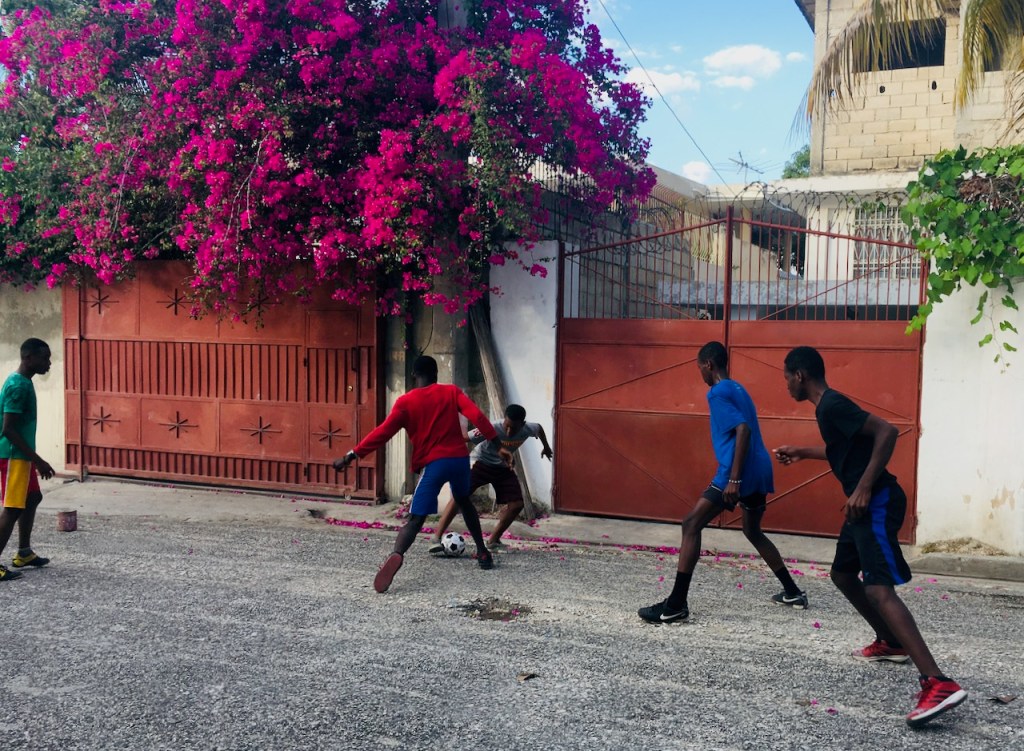
A common sight outside my home in Port-au-Prince. It’s a mini-World Cup just about every afternoon.

One year ago today, I boarded a plane in Port-au-Prince headed to Miami. From there, I traveled to Virginia. This was no vacation. Neither was it traveling for work. I was evacuating Haiti, a phrase I’ve resisted using — in fact — it pains me to type those words.

And before you get the impression I am back in Haiti — I’m not. I’m still in Virginia, my first and other home.

Haiti, the place where I had lived for more than seven years, was hot, as my friends there say. “Ayiti cho!” Haiti is hot! Not just weather-wise. More than a year of turbulence of all kinds had culminated into “peyi lòk”, countrywide lockdown.

Yeah, always the trendsetter, Haiti was locked down long before the rest of the world so easily used that phrase.

Opposition parties had promised the lock down in early September 2019 as school was starting. They protested President Jovenel Moise’s corruption, though the politicians in Parliament faced just as many charges of corruption. The economy of Haiti was in shambles with the local currency weakening, inflation rising and unemployment skyrocketing.

Gangs and random criminals controlled the streets, with robberies and kidnappings, often fatal, on the rise.

So, no, Haiti was not the place to be. Even so, to leave the place I have come to love as my home, to hug my friends good-bye and head back to Virginia was extremely difficult.

After five months in the States, I was able to return to Haiti in early March, only to leave again after 18 days, this time because of the pandemic and its version of lockdown.

I’ve come to think of it as being out of Haiti for a year except for a short vacation back home.

Home. I named this blog The Long Way Home long before I would realize what that means. Switching careers, stepping into my calling as a mission co-worker and adapting to living in Port-au-Prince — all of this has changed me. And for the better.

I am blessed to spend time in Virginia with my sister and her family, enjoying four seasons in a place that has more than just summer and enjoying the comforts of the United States. I am able to work from here, keeping up with friends and colleagues in Haiti and around the U.S. and world.

Change, especially when its abrupt and significant, requires adjustment. After a year, it feels relatively normal wearing socks rather than flip flops and sweatshirts instead of short sleeves. Still, though, I’m eager to return to that other home, to the place where the hot sun beats down, where soccer players whoop and yell outside the front gate, where the kitchen table often is crowded and prayers always earnest.

For now, though, I take great pleasure in this wild and crazy life I live and look forward to what comes next.

As a mission co-worker with Presbyterian Mission Agency, I’ve been able to visit a number of other countries. I’ve learned a new language. I’ve come to love so many amazing people who at first blush seem so different.

I’ve lost loved ones. I’ve mourned and celebrated, been loved and taken some hard knocks. And after almost eight years, I find myself back where I started.

What a year it’s been. While here in the U.S. we still avoid crowds and the COVID, the people of Haiti are doing the same and still struggling with a perilous economy and political upheaval, dangerous criminal activity and the end of hurricane season.

What a life.

The beauty of it, always, is that home is not an address. It’s where you hang your hat.

And it’s where you leave a part of your heart.

Ke-nee deep in kenep season

Even as their lives are filled with often heartbreaking challenges, the people of Haiti seek out the sweetness of life. Often that sweetness grows on tress.

They just dangled there, tantalizing us with juicy sweet tartness. For weeks, so many weeks, we waited.

“Kenep pre?” I’d ask hopefully. Are they ready?

“Yo poko pare,” Garry would respond. They aren’t ripe yet.

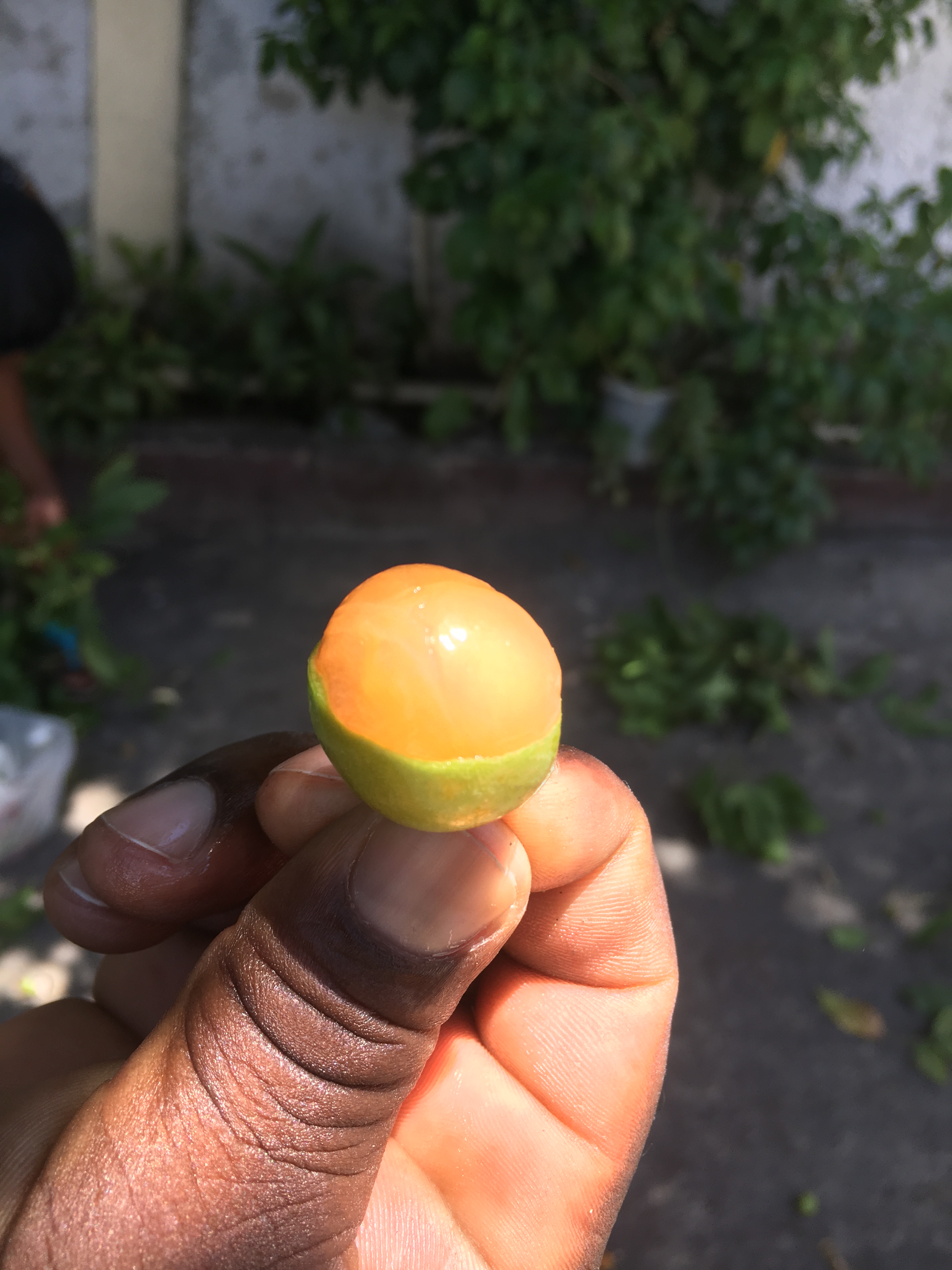
A few times, I tried one, breaking the still supple green rind, pop the pulpy fruit on my tongue, and promptly spit it out.

The kenep is a tropical delight. It grows on a tall tree that provides lovely shade year-round. But by early August, its sweet fruit gets all our attention.

When ripe, the rind tightens so it is cracks open. The pulpy fruit covers a large round seed about the size of an ordinary marble. The flavor lasts a few minutes – something like the taste of SweetTarts candy.

To be fair, it’s not even our tree. It generously leans over the wall from the neighbors house. The low-hanging fruit goes first. Even the man who collects our trash lifts a hand up to pull down a bundle of kenep on his way out the gate.

In about a week after the kenep ripened, Nadia began using a long pole rigged with a Y-shaped branch to isolate and twist small branches and retrieve the bunches.

Small boys, and some not so small, gather at the gate asking if we can give them kenep. A glance up the street shows that another neighbor’s kenep tree has lured other boys onto the adjacent alow wall where they pick the fruit and collect them in plastic bags.

On a good day, the street is littered with the green rinds and crowded with happy-faced kids.

Even Bobby the half-grown pup gets into the action. He doesn’t stop to toss the rind. He just eats the whole thing.

As for the rest of us, we enjoy them one or two at a time, or gather a bunch to eat later.

Like the other best things in life, we know the season will draw to a close, leaving us waiting another 11 months.

Searching for home in Haiti

cindy first sunday
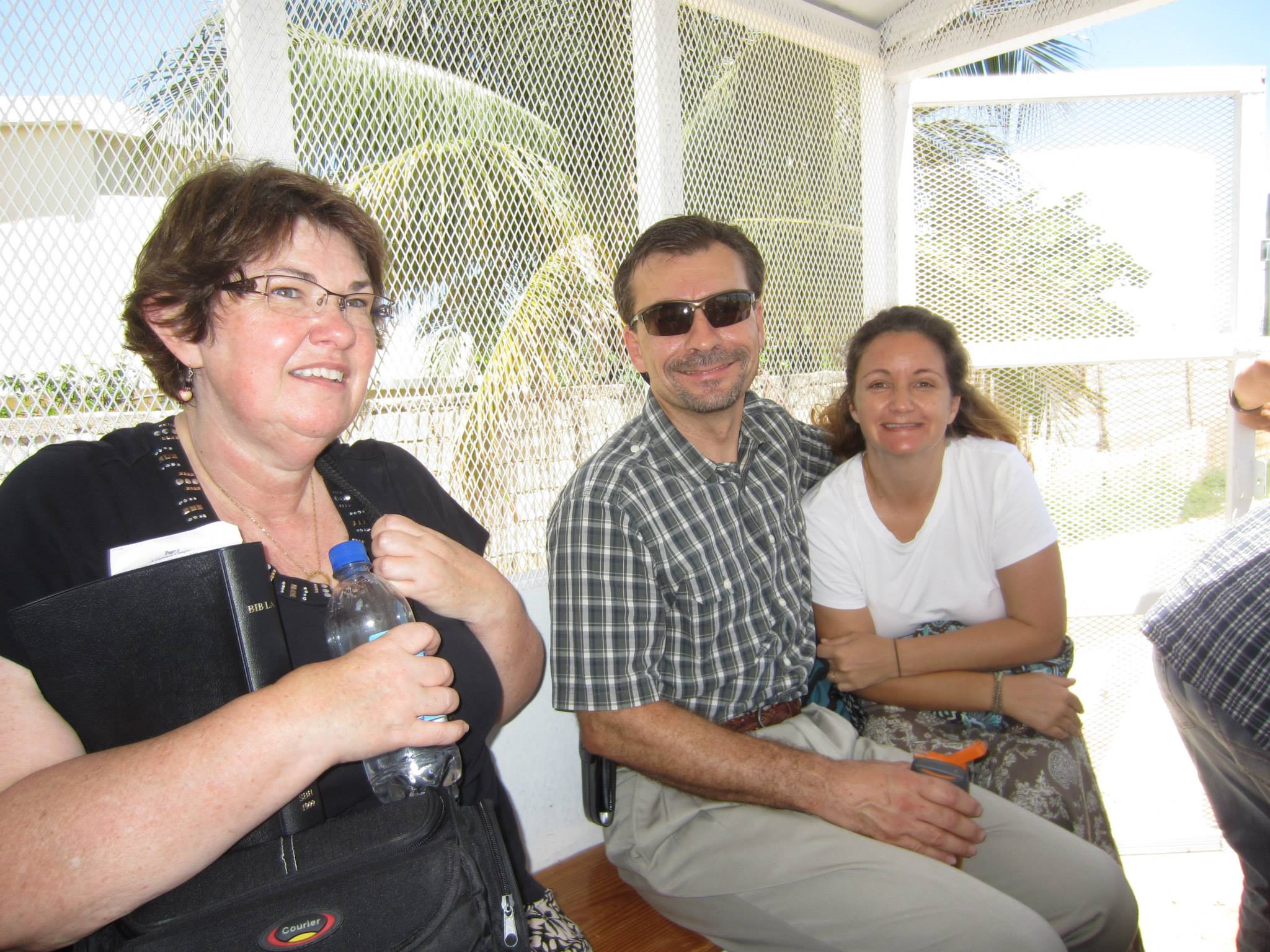
Pretty much how I spent my first year in Haiti, clutching a Creole Bible, camera bag, water bottle — and my heart. Here with Russell Cook and Tracey Herrera, who along with their group from Florida, invited me to church with them my first Sunday in Port-au-Prince. (Photo by Connie Cook)

This recovering journalist turned mission co-worker moved to Haiti to live and serve on May 25, 2013. To mark this extraordinary five year anniversary, here are some stories of the highlights and lowlights. To be sure, I am grateful beyond measure to all those who have made this journey possible. I only hope that Haiti, the people of Haiti and the rich joining of hands of sisters and brothers from both my lands make your lives a bit richer as well.

(This is an occasional series)

Home is a charged word to me since I came to live in Haiti. That was almost five years ago. Still hard to believe. So much has changed. I have changed so much. As the anniversary approaches, I find myself examining this journey, understanding the commonality of all our lives and lifestyles. We are sent as mission co-workers into poor lands, but it is not the poverty that connects us, but the spirit of generosity. 

I owe the joy and lessons of my life to tremendous generosity of many people in my life, both Haitian and North American.

My story in Haiti begins the afternoon of May 25, 2013.

So before making the trip here, loaded down with two bulging suitcases, a backpack and a carry-on, I listened to every word of “Home” by Phillip Phillips:

 Settle down, it’ll all be clear

Don’t pay no mind to the demons

They fill you with fear

The trouble — it might drag you down

If you get lost, you can always be found

Just know you’re not alone 

‘Cause I’m gonna make this place your home.

 With due apologies to the songwriter Phillips, to me, it was if God himself was talking me through what would be this huge change in my life. And whether to the credit of Phillips or God or both, it worked.

Five years ago on May 25, I arrived in Port-au-Prince, found my taxi driver and settled into Trinity Lodge, a guesthouse that, too, has become one of my homes here.

By next morning, I was stepping up into a huge truck to go to church with a group also staying at Trinity Lodge.

And by early Monday morning, I was making the first of many (many!) mistakes. Like many foreigners I was unclear on the difference between the U.S. do dollar and the “Haitian dollar.” The “Haitian dollar” doesn’t exist. It’s a term used to mean 5 times five gourdes. Or 25 gourdes. Which at that time was about .50 cents, U.S. So when I approached the woman selling ice cold water by the bottle, I asked her how much. She said in Creole, “senk dola.” Five dollars. (I blame this next part on being tired and hot and obnoxiously overconfident) “Five dollars?” I exclaimed, outraged but thirsty. She nodded. “U.S.?” Again, she nodded. (I mean, what would you do, with a red-faced, obnoxiously overconfident foreigner standing in front of you?) I pulled out a five-dollar bill, took the water, shook my head in disgust and walked up the dusty street slurping cold water.

(This story still embarrasses me, but it is a good reminder of what I would quickly realize would be my new life: I am often wrong.)

 (Next up: Cindy goes to Cherident!)

Hope on the line

Heavy rains continue to fall in Haiti, slowing the recovery of people in hurricane-affected regions. But there is hope.

img_2179

I’ve been back in Haiti less than a month, and already it’s been a whirlwind. With a lot of help from good friends, I moved into a new home, met Almand who is here to serve as “guardian,” someone whose primary job is to keep us safe and whose secondary mission is to become part of our family.

Paul Sinette continues to care for me — she has to be the best cook in Haiti, and she helps me navigate life. Her son Carlens is often here, playing Dominos with Almand.

They all teach me Creole, learn English from me and we take turns saying Grace.

It’s a good deal.

We welcomed a kitten to the house about a week ago. Kimberly, named by Paul Sinette, pretty much runs the place and brings much entertainment.

As you know, Hurricane Matthew did a number on several parts of Haiti, especially to the southern peninsula. The storm hit Oct. 4 and 5. The second weekend of November I was able to visit the South and Grand Anse departments that suffered catastrophic damage.

Fabienne Jean, coordinator of our network FONDAMA, and I traveled to Les Cayes and then onto Grand Anse to visit with partner organizations and also Luke Osikoye, international associate with Presbyterian Disaster Assistance.

Passing Grand Goave on National Route 2, we began to see the damage Matthew left behind. The bridge at Petit Goave was washed out, and a detour was in place while workers replaced it.

Torrential rains have continued in the region, so beyond the obvious hurricane damage — destroyed houses, roofless homes and trees devoid of leaves and branches — we passed flooded roadsides, yards and fields.

Farmers who had access to oxen used them to plow fields. People of all ages walked the roadways carrying water, food and construction materials.

We passed a number of funerals — people wearing black and white, walking slowing in small groups. On the national highway outside of Les Cayes a beat up pickup carried a casket and followed a five-person brass band while friends and family of the deceased followed on foot.

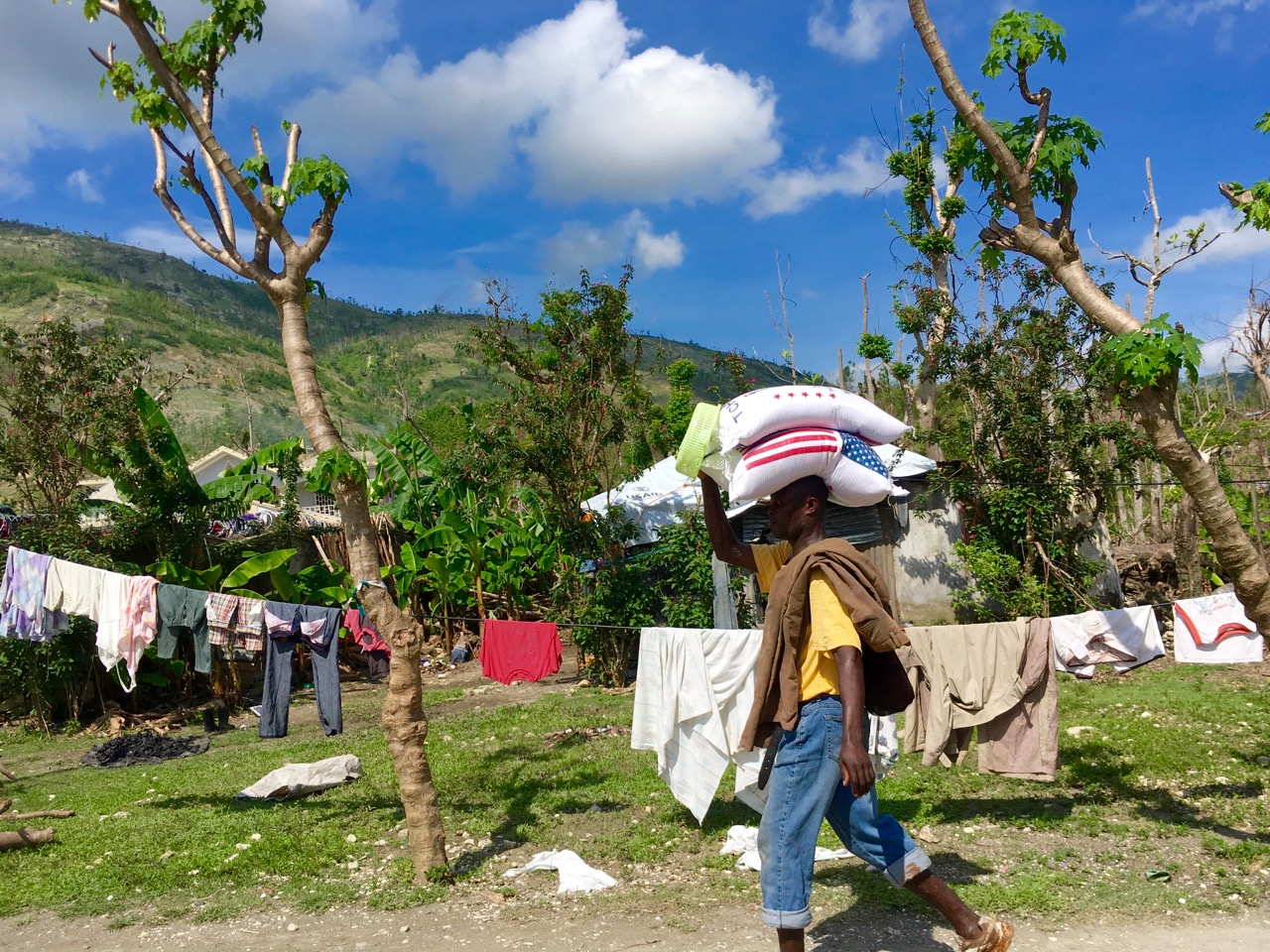
In Moron and Marfranc, World Food Programme and USAID were handing out bags of rice and tarps. In both villages, people lined up in the hot sun to wait. We saw dozens of people carrying their aid home — many of them waste-deep through overflowing rivers.

The further we went, though, and the closer we got to the village of Chambellan located near the southern peninsula’s tip, I saw the bits of hope.

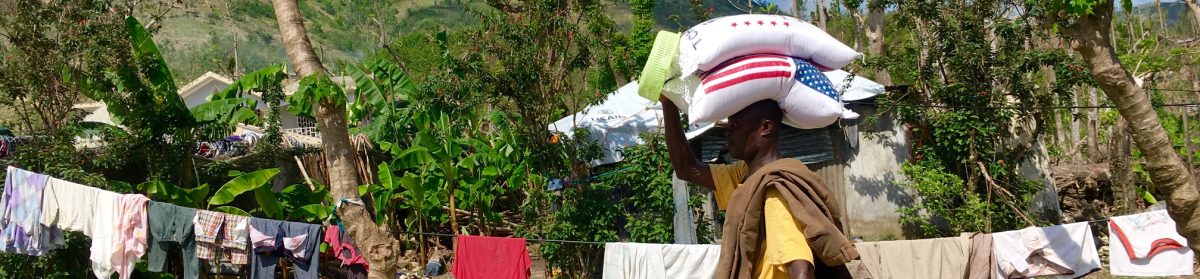
Clothes and sheets and underwear, washed in whatever water was available and simply hanging in the breeze.

Red blouses, green slacks, blue jeans, multi-colored sheets — waving as if a grand sign that in spite of it all, life goes on.

In clean clothes.

I will have more to tell you soon, including ways you can help. FONDAMA is working on a proposal through PDA to help people in these communities with recovery.

Please know that you are appreciated — for caring, for reading and for continuing to pray for all the people of Haiti and those around the world.

God bless.

Photo by Jackson


Jackson photo of teacher
A professor at the CODEP school. Photo by Jackson.


“Li pa bon,” Inez told me quietly.

He’s not good.

Jackson already had found me as a willing compatriot. He was eating fried fish from a small pink and white striped bag commonly used by food vendors on the street. The shape of his eyes and ready affection let me know he was not a student at the school.
“Oh, he’s good, all right,” I smiled at Inez who still looked worried.
No, he doesn’t speak much. And yes, he is intellectually challenged.
But Jackson is good. Jackson is great.
Realizing that I understood Jackson’s situation, Inez smiled broadly as the 13-year-old and I communicated through a few words and lots of gestures. Inez understood that I cared, that I wouldn’t smile at the boy then shove him away.
If you know what it is to be seized with joy, then you know my heart in Haiti.
It’s hard here. No doubt. The struggles of the people in this tropical land are well publicized. Very often, an American’s first thought when the word Haiti is mentioned is of pity. How can so much hardship happen on people who deserve so much more?
Government corruption leads to hunger, lack of schools and adequate housing. Drought and land grabbing brings misery to those who once were able to eat from their own gardens. Deforestation means dramatic changes in weather patterns, hotter weather, less rain and fewer chances for shade from the scorching sun.
And in it all there are so many connections made between people — people helping people. And in witnessing that, I find my greatest source of joy.
I was with Frank Dimmock, a colleague from Presbyterian Church (USA) World Mission. Frank was in Haiti visiting schools as part of his understanding of education in the countries in which mission workers serve around the world.

We were visiting Institution Mixte de Duclo, a junior high school in the South of Haiti operated by CODEP, a community development project predominantly supported by Presbyterians. While the 42 students were busy in the classrooms, Jackson wandered around. He seemed very happy to greet us as visitors.

And having finished his meal, he asked me for money to buy something to eat.
“You just ate,” I teased him. He grinned and Inez grinned and Jackson’s attention quickly turned to something else.

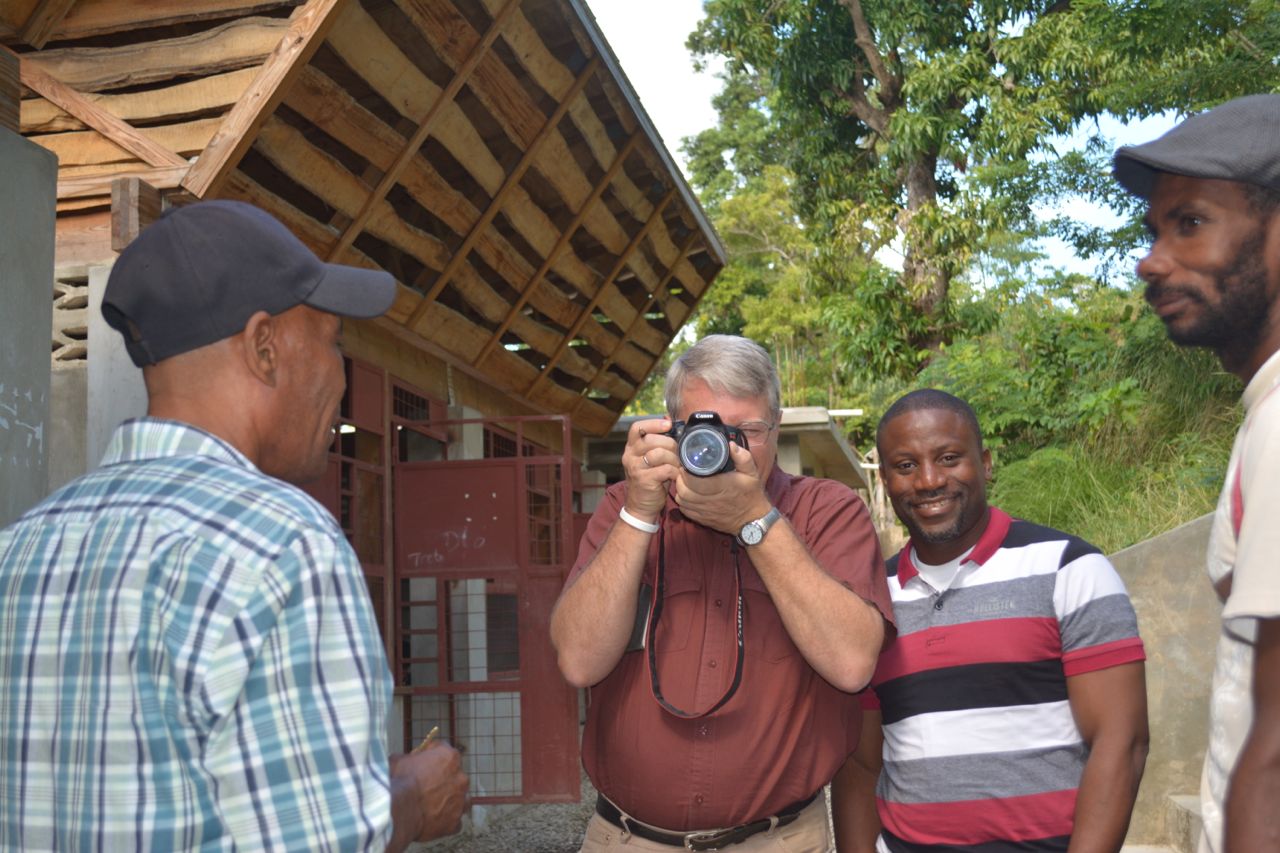
Jackson taking a photo
Jackson taking a photo of Frank Dimmock and Marc Charles. With a little help from a friend.

My camera.
His first request, through gestures was for me to take a picture of him. But that wasn’t enough.
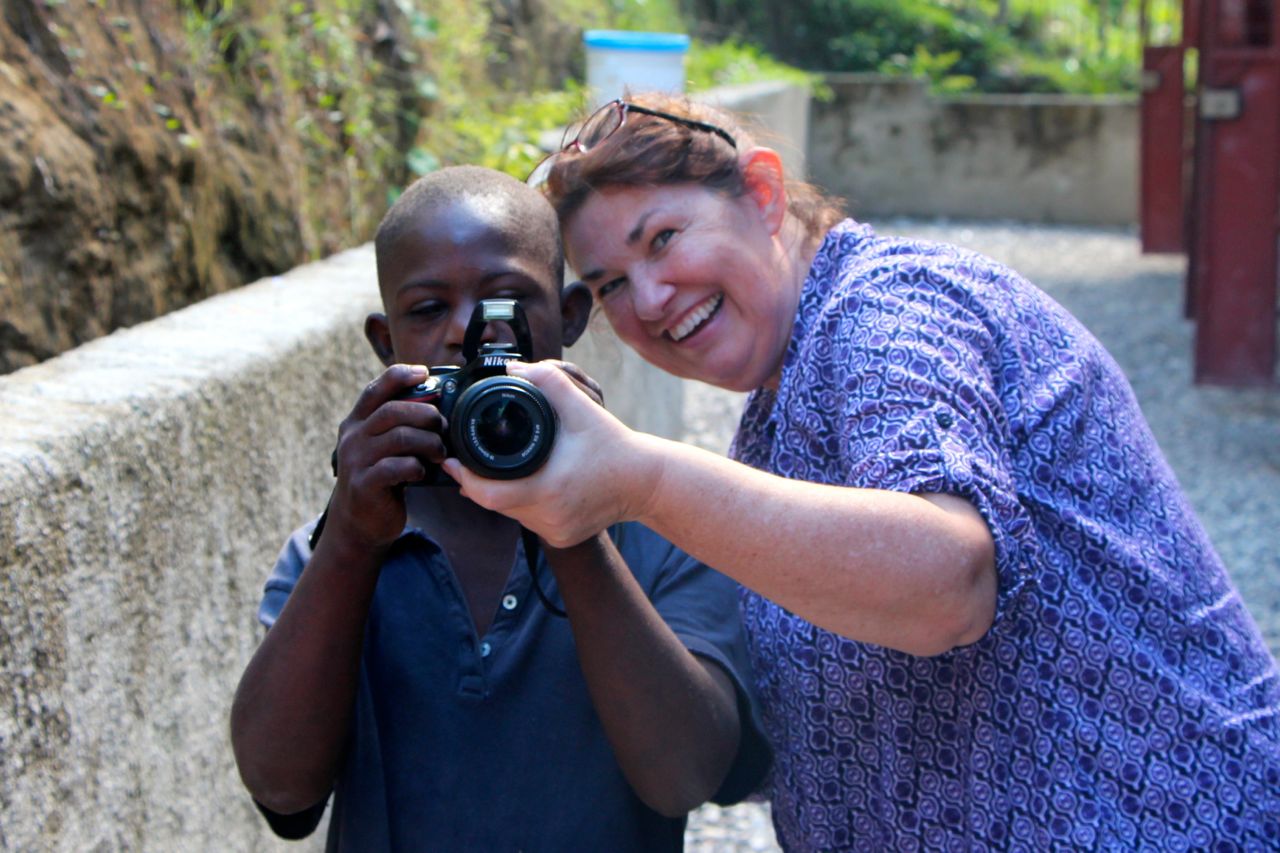
It was clear Jackson was ready to become the photographer.
With the strap of my Nikon around his neck and a few instructions, he was ready to go.

jackson frank shooting pic
Frank Dimmock taking a photo of Jackson taking his photo. Marc Charles, our friend and translator, in the striped shirt.

And he went, snapping photos of the students, then hurriedly stepping into the classrooms to show the girls the photos he had taken.
The students howled with laughter and encouragement. Jackson beamed.

Jackson photo of school
One of Jackson’s photos of Institution Mixte de Duclo, a CODEP school in the southeast of Haiti.

The leaders of CODEP who were with us grinned. And Inez laughed along with us.
That’s when it hit – as it so often does – the seizing of my heart with happiness.
In places like Haiti where surviving takes a lot of effort and thriving takes a lot of help, the Jacksons of the world are among the most vulnerable. Often they are pushed to the sides of the community, cared for, but not given the support we all need. The mentally disabled often are the “least of these” in poor communities.
But here in this small, very well built junior high school, a boy with challenges greater than many, is loved, cared for and a part of the community.
Let Jackson teach us again – the “least of these” is in no way connected to “lesser than.”

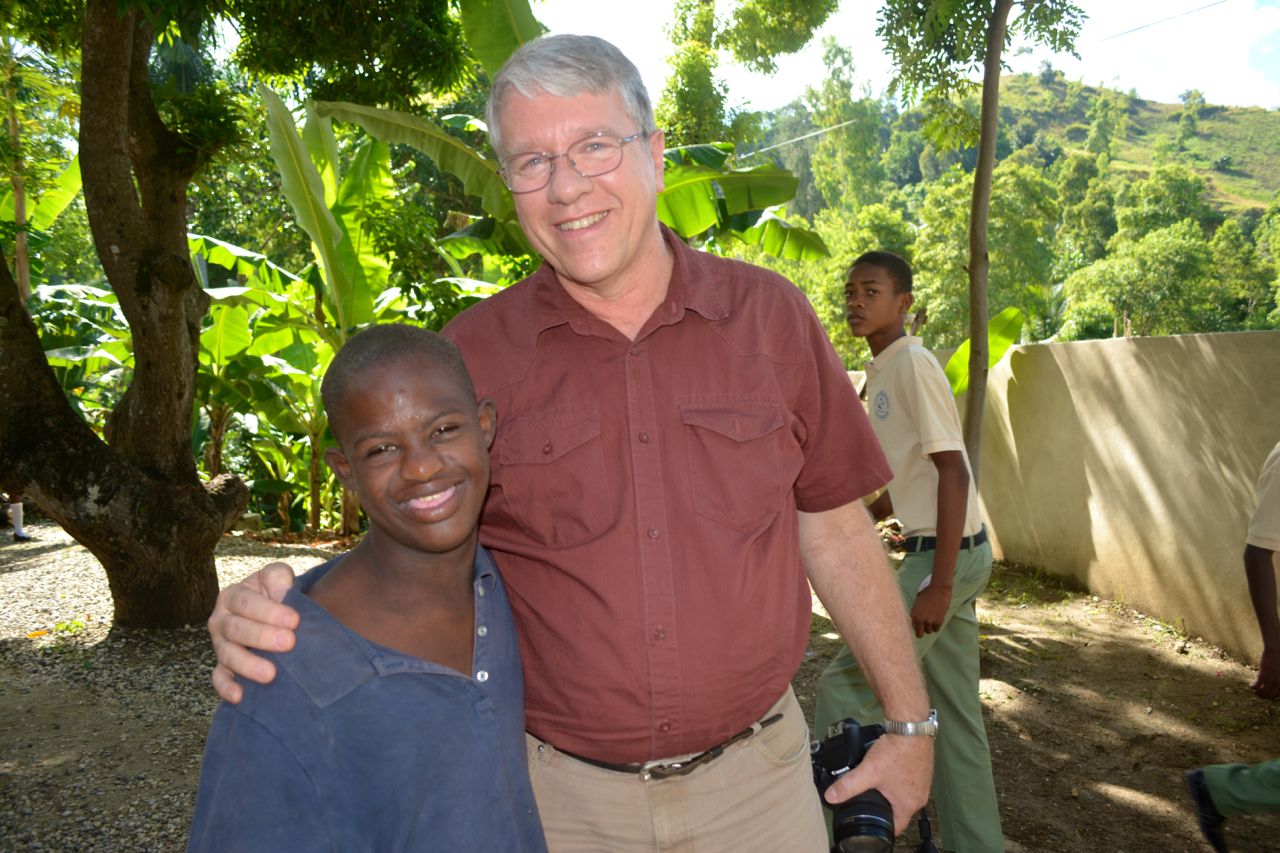
Jackson with Frank
Jackson and Frank.

Thank you, my friend, Jackson for sharing time with me on Friday.
And thank you, community of Institution Mixte de Duclo and CODEP for caring for our sweet friend.
P.S. While Jackson didn’t get any money for food that he was requesting from us, he found his way to the vehicle where he hit up our driver, Johnny. And he happily walked away with the cookies Johnny found for him. Photography is great, but cookies?
Well played, Jackson. Well played.

Priye a ap monte. Gras la ap desann!

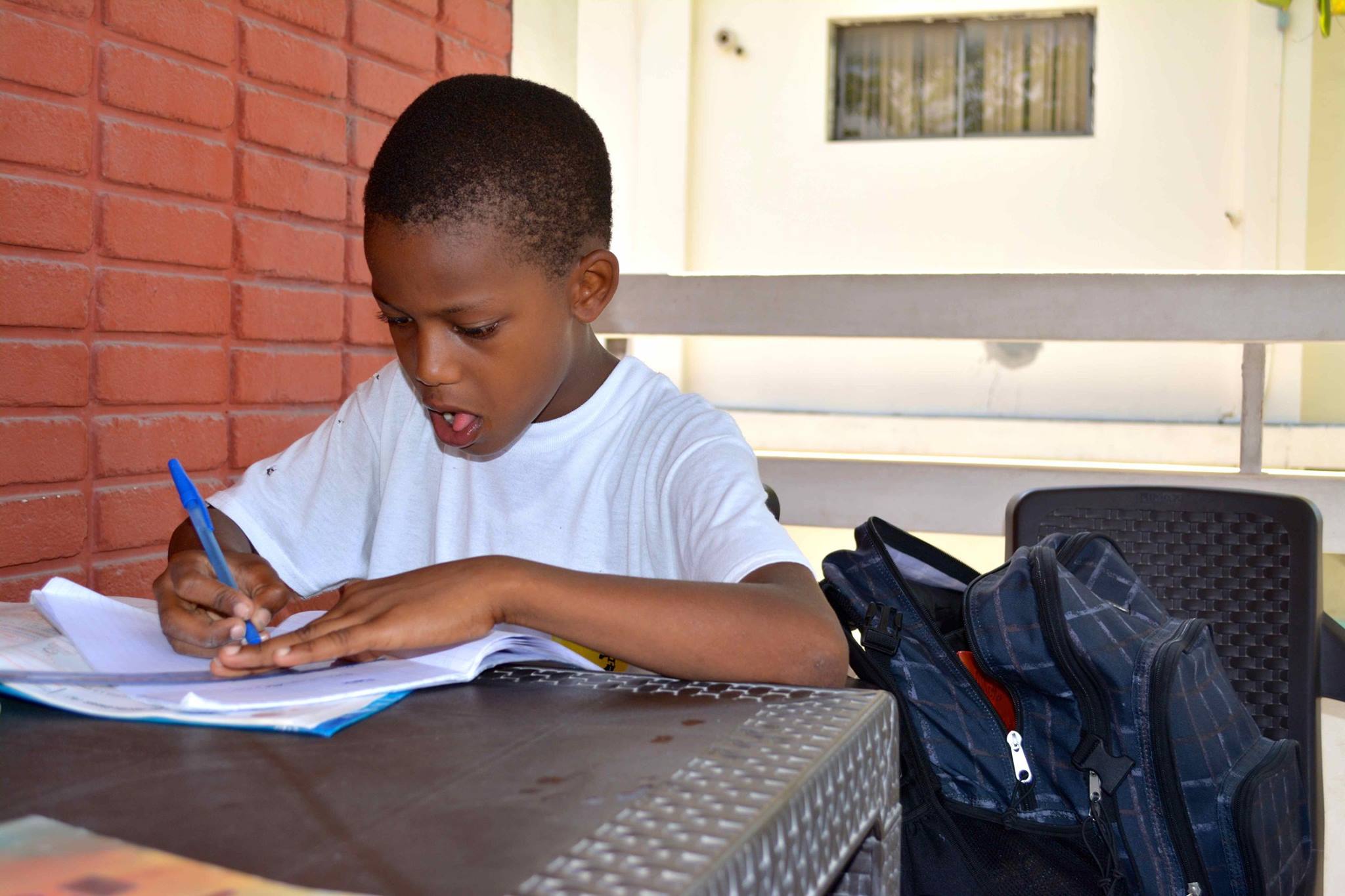
Carlins, 9, hard at it. He spends a lot of time on homework, and his report card proves it!

WARNING: Big ol’ missionary confession coming.
The concept and practice of prayer simply confounds me.
Oh, I pray, don’t get me wrong. I often pray out loud. I pray in two languages now, adding Haitian Creole to my repertoire. And I pray each night before I sleep.
Mostly, though, it seems like talking to a friend. I mean, I pray for change: Please help the little baby in surgery today.
And I pray out of my own personal, sometimes ridiculous-seeming needs: Dear Lord, please help me get my work done tomorrow!
And I send out urgent requests: “Dear God, in the name of everything that is holy, please get that gigantic tap-tap heading right toward me back in its lane …. OK. Whew. Thank you, God. Amen.”
And sometimes what I’ve prayed for happens. And sometimes it doesn’t. It’s not like I go back and check. So, often, I’m surprised when things turn out well.
That’s the confession. Shouldn’t prayer and faith be more closely connected? If my faith is strong, should I ever be surprised?
Anyway, the other night, in the midst of several texts with a friend, I was surprised again. Enough to give me pause. My friend is a young guy. He’s a husband and has a 10-year-old daughter. He is starting a small tree nursery in his small yard. He works very hard, but his project takes a lot out of him. In Creole, he wrote that his nursery was doing well, but that it was a long way to the river and back, and he needed to fetch water for the small plants because it hadn’t rained in a while.
So, I, like a good missionary, wrote that I would pray for rain. But it’s not like I stopped right there and went through the motions and said the words. I just wrote that I would pray for rain for my friend’s region.
And in his next text, Givenson said that a gentle rain had started.
Right then. Just as I wrote those words. And you can call it is a big ol’ coincidence. Or you could call it God looking over our shoulders and reading the texts ….
Or, as I am doing, you could understand that rain very often is an answer to prayer.
Just like the ferocious looking tap-tap heading my way moving just in a nick of time, I felt great relief at Givenson’s news of rain showers.
It happened again this morning.
I had just posted on Facebook about 21 men and women who died when the boat they were fleeing Haiti in sank in stormy weather. More than dozen people still are missing. And this came a week after six people died in flooding in Port-au-Prince.
Where’s the hope? The people in the boat had lost hope in Haiti, so they set off in search of it somewhere else.
As expected, several of my friends on Facebook immediately responded, sharing the post, sending prayers. And, yet, my heart was sinking and searching for the hope.
That was when my friend and housekeeper Paul Sinette came in the door. As soon as we said “bonjou,” she pulled open an envelope and showed me what was inside. Her 9-year-old son’s report card.
Carlins has done well this session! His grades are improving! I shared her joy.
I share her pride.
And, so much more than that, I share Paul Sinette’s hope.
And like a prayer that went up, the answer came in the door in that little envelope, marked in little boxes and shining in the huge grin on this mother’s face.
And here’s the Good News!
Last weekend we yelled Hallelujah! Last Sunday, we sang, “Jesus Christ has risen!”
And today, and tomorrow and through eternity, He still is risen!
Such good news. Wrapped in hopes and sent in prayer, we find it every moment of the day.
As the Haitian proverb goes, “Priye a ap monte, gras la ap desann!”
The prayer is going up. The Grace is coming down!
The challenge, as always, is to recognize it!

Planting corn in Haiti, and the pebble in my sandal

ImageFour seeds, if you’re talking about corn. Two seeds if it’s congo beans. Those were my only instructions. The rest I figured out by watching Papa Luc as he planted one of his many gardens around Cherident.

Two men were working ahead, using pick axes to dig shallow holes about a foot apart. Our job, Papa Luc’s and mine, was to drop seeds in the holes and cover them. Papa Luc had a small stick to shove loose dirt back over the seeds.

I used my right foot.

I had a pebble in my sandal the rest of the day. I didn’t try to lose it. I wanted to remember that feeling — planting corn in Haiti.

I’ve been living and working in Haiti for 10 months now. It’s been a whirlwind. On my off days — when I’m in my comfortable apartment in Port-au-Prince — I remember and go through my many photos. And as I long to be back “out there”, out in the countryside with Haitian farmers not unlike Papa Luc.

But Papa Luc is special to me. I spent a month living with his family in Cherident, a small village along a ridge in the southern mountains, when I first moved here. My work is with FONDAMA, a Joining Hands network of grassroots farmer organizations. So before I began traveling the country to meet people from the 11 organizations, I needed time to live like a rural Haitian and study language and culture. And along the way, Luc Celestin and his grown children adopted me.

When I arrived for my month-long stay, it was early June. The cornfield beside the house was almost fully grown. We already were pulling ears of corn to eat – either dried and ground or roasted.

My first conversations with Papa Luc were slow-going. He doesn’t speak English, and I was becoming more comfortable with Kreyol. So we talked about a common subject — farming. I grew up on a farm in Augusta County. My father had what I was sure was the world’s largest garden. At least it felt that way when I was 8 and had to help plant peas, green beans, tomatoes, potatoes, onions, cucumbers, melons, carrots …. Early spring was for plowing the ground. Then Dad would level it out and begin hoeing the rows. I would help drop the seeds, carefully, and then cover them over with the hoe.

For corn, of course, Dad plowed, then dragged the fields smooth and attached the corn planter to the Massie Ferguson tractor. I would go with him to Eavers warehouse  to pick up the corn seed. It was in huge burlap sacks. When I was a preschooler, I remember Dad taking days off from his day job to plant corn, and I would go with him. While he worked with the tractor, I’d crawl up on those sacks of corn seed in the open trunk of the Ford Galaxy and doze while he worked.

I remember the sun and the breeze and the look of satisfaction Dad always carried that he was working his farm.

He loved that work.

And so does Papa Luc. A garden means food for your family — and if you have the land and resources for more seeds, it can help feed the community.

During my month stay, Papa Luc’s eight children each spent time with me. Many of them speak English, so while I was taking a break from Kreyol lessons, they taught me about the community. We went on long walks across the fields and hills around Cherident. Just about everywhere we walked, one would say: “That’s Papa Luc’s garden there.” Miles away on the other side of the ridge: “Papa Luc planted this field, too.”

And that is how I learned — talking and walking.

On evenings after supper, Papa Luc and I often would be the only ones still at the table. I would ask him about the crops he grew (corn, black beans, congo beans, white beans, pumpkin squash). I’d ask about growing seasons (two for corn, sometimes three for beans). And I would tell him about my father. I was learning language, culture AND getting a basic education about my work with FONDAMA.

After leaving Cherident, I began traveling the countryside to visit with the organizations. I met people in formal and informal meetings. I walked with them through their fields and visited their seed silos. But these were quick visits — usually only three or four days. The way I learn about how crops grow in Haiti is by visiting Cherident. I want to see entire growing seasons. At Cherident in June, the corn still was growing tall. By September and October, the stalks were brown. I missed the harvest season, but I know how it works — stalks are cut and gathered into bunches, then the bunches are raised far above the ground by a rope and pulley.

This past week, I had another opportunity to visit Cherident. A friend from Arkansas was there with a church group that partners with a nearby school. When I called Papa Luc to say I was coming back, he said he was planting corn. He graciously agreed to let me help the next morning. Though I was staying at the rectory and guesthouse, I was eager to work in the cornfield early Thursday morning. The group wasn’t going back to Port-au-Prince until about 9:30, so after breakfast, I set out to find him.

Lucson, Papa Luc’s oldest son, told me his Dad was working in the field beside Madame Pepe’s house. I took my camera with me, along with a water bottle.

The road through Cherident is wide and dusty. It didn’t take me long to find him. Papa Luc was down in a field with two workers. The workers walked ahead digging small, shallow holes in the rocky ground with pick axes, while Papa Luc dropped a few seeds into each hole and covered them back over.

I thought of the many fields he plants. Every seed. Every tiny seed. By hand.

It’s difficult not to remember my own father’s garden when I am in Haiti. So much is the same.

There is a joy in the backbreaking work of tilling land and nursing seeds to harvest.

“Four seeds,” Papa Luc said, using his thumb to separate four corn kernels from the handful he held. With a gentle flick, he dropped the yellow seeds into the hole, then used the stick he held in his right hand to cover them with dirt.

“Four seeds.”

He handed me half his handful, and I set to work on the unplanted holes, covering the seeds with my sandaled right foot.

In the upper part of the field, we planted congo beans along with the corn. I’d drop in two bean seeds; Papa Luc carried a handful of corn.

We worked steadily. The morning was cool. A slight breeze fanned us. The soil felt moist, but I know many people are concerned about drought this year. The northern part of Haiti had little rain throughout the winter. The government has had to bring in food for families there. The FONDAMA organization in the North have few seeds in their silos — the last season’s crop burned up from lack of rain.

No food. No seeds for the spring.

It’s a little better in the South, but not by much. We will wait and pray and see.

When 9:30 came, the vehicle taking us to Port-au-Prince stopped at the field so I could leave.

I kept the pebble in my shoe the rest of the day. I look forward to my next trip to the mountains to watch the corn and beans grow.

Please join with us in prayer for rain for all of Haiti. So much work is done — seed by seed — all by hand to feed this country. All we need now is rain.